Indian Rocks Beach
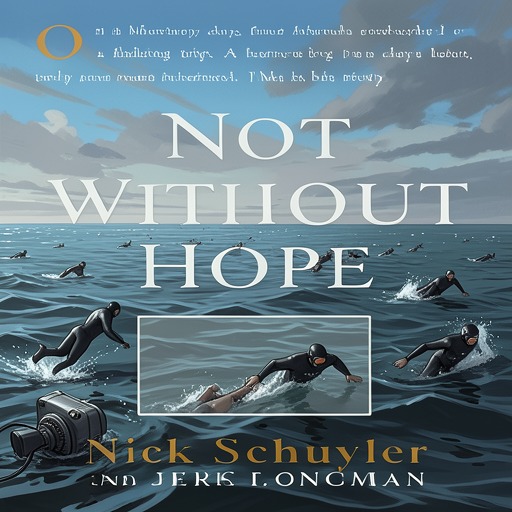
Not Without HopeIndian Rocks Beach is the Florida shoreline where Nick Schuyler’s relationship with the water is shown after the 2009 Clearwater boating accident. What might otherwise be a place for volleyball, swimming, and sunset becomes a boundary between ordinary life and the Gulf of Mexico, carrying the remembered violence of the capsizing, the deaths of three friends, and the unresolved burden of survival.
Setting and Association
Indian Rocks Beach is mentioned as part of a Memorial Day weekend visit with Kristen Schuyler, near St. Pete Beach. The visit retained familiar elements of a beach outing: the group played beach volleyball, and Nick approached the water closely enough to put his foot in it. Yet the setting no longer functioned as uncomplicated recreation. He compared its temperature with the much colder water in which he had recently survived, telling Kristen, “It’s about thirty degrees warmer than the last time I felt it.” The comparison turns a commonplace sensory impression into a measurement of catastrophe: the beach water is warmer, but the memory attached to water remains cold.
The place is also connected indirectly to the accident’s original environment. Nick and the other fishermen had been thrown into the Gulf of Mexico after the anchor line was pulled tight, the stern submerged, and the boat capsized. The Florida Fish and Wildlife Conservation Commission later identified the chain of causes as the improper tying of the anchor line to an eye bracket on the port side of the transom, the attempt to throttle forward to free the anchor, and the failure to leave enough slack. Indian Rocks Beach therefore appears in the aftermath of a maritime disaster whose physical mechanics remain inseparable from Nick’s later bodily reaction to the sea.
From Recreation to Avoidance
Nick had previously entered water without hesitation; after the accident, even removing sand from his foot no longer prompted him to jump in. At Indian Rocks Beach, he stopped at the edge, placed one foot in the water, and then used the public shower instead. The small substitution is revealing. He could tolerate contact under controlled conditions, but immersion remained intolerable, making the beach a site of graduated avoidance rather than recovery completed.
The contrast is sharpened by what the accident had demanded of the men. The overturned boat offered little visible shelter in the rough Gulf, and the Coast Guard searchers would have been looking for only a small portion of white hull amid vast numbers of whitecaps. In the water, swallowing seawater could produce a dangerous sodium imbalance, dehydration, delirium, seizures, and death, while cold exposure could lead to clumsiness, slurred speech, confusion, and irrational behavior. At Indian Rocks Beach, the water is physically safer, but Nick’s body continues to respond as though the earlier threat has not ended.
Trauma and Repetition
Nick returned to Indian Rocks Beach in July with Paula Oliveira. They sat there at sunset, while everyone else went back to the beach house; Nick remained outside for an hour and a half, looking at the water. The prolonged gaze combines distance and compulsion. He does not enter, yet he cannot simply turn away. The shoreline permits him to repeat the encounter under changed circumstances, with land beneath him and companions nearby, while preserving the visual object that triggers the memory.
Looking at the water brought back brief images of the men’s faces, their struggle, and their final words. Nick remembered that two of them died in his arms. The memories were fragmented into “half-second glimpses,” but their recurrence gave the beach a durable psychological presence. When other people told him to forget, the instruction failed because the water itself remained a witness in his imagination. He described the feeling that his friends were still in it and would always be in it, turning the visible surface at Indian Rocks Beach into a continuing repository of loss.
Narrative Significance
Indian Rocks Beach demonstrates that the disaster’s consequences extend beyond the capsized boat and the period of rescue. Nick survived the immediate physiological crisis—he was eventually found with a temperature of 89.5 degrees, blue lips, clammy skin, labored breathing, and early signs of shock—but survival did not restore his former relation to water. Medical explanation also complicates moral self-blame: hypothermia could produce delirium and cardiac failure, and Dr. Mark Rumbak argued that the other men were confused rather than simply choosing to give up. Even so, the beach preserves the emotional problem that medical reasoning cannot remove.
The location thus serves as a recurring threshold in Nick’s post-accident life. He can visit it, play on it, sit beside it, and touch the water, but he cannot yet treat it as neutral scenery. Indian Rocks Beach embodies the distance between physical rescue and psychological release: the sea is warmer than the water of the accident, the shore is secure, and the event is over, yet the remembered dead remain present whenever Nick looks outward.